
“Electrify! More Renewables!” are the rallying cries in response to the Iran War energy shock. This might work in the medium term but requires more money just as bills are set to go up. Meanwhile, over 70 countries still have coal power plants. Coal is an expedient solution because key exporter countries are outside the Middle East, it can be delivered relatively quickly, and stockpiled for months without much cost. Places like Italy, Japan, and Indonesia have reversed coal restriction policies, but this is not a comeback. The great myth of the energy transition is that coal ever left.
Coal production and share in primary energy
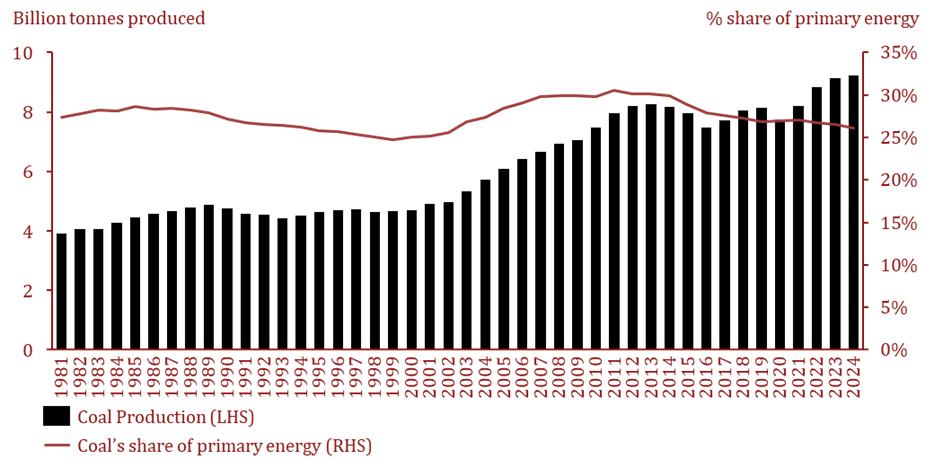
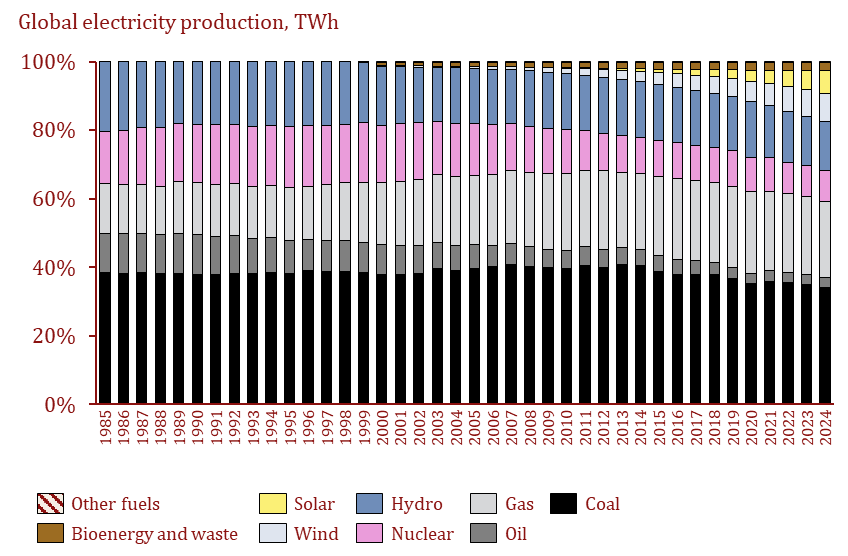
Before the war began, coal represented a third of global electricity supply. Coal is the largest energy commodity by mass[i], estimated to represent over $500 billion in market value per year[ii]. Coal generates 37% of global carbon emissions, more than oil or gas or land use change, and is the leading cause of deaths from electricity. Coal is still used for 70% of steel production and is even replacing petrochemicals in places like China and South Africa. Despite coal’s decline in Europe and the US, global demand has broken new records in each of the past four years. Often seen as a relic of the industrial era, coal is an integral part of the global 21st century economy. And as recently as last year, we were still building more.
Global Electricity Production by Source
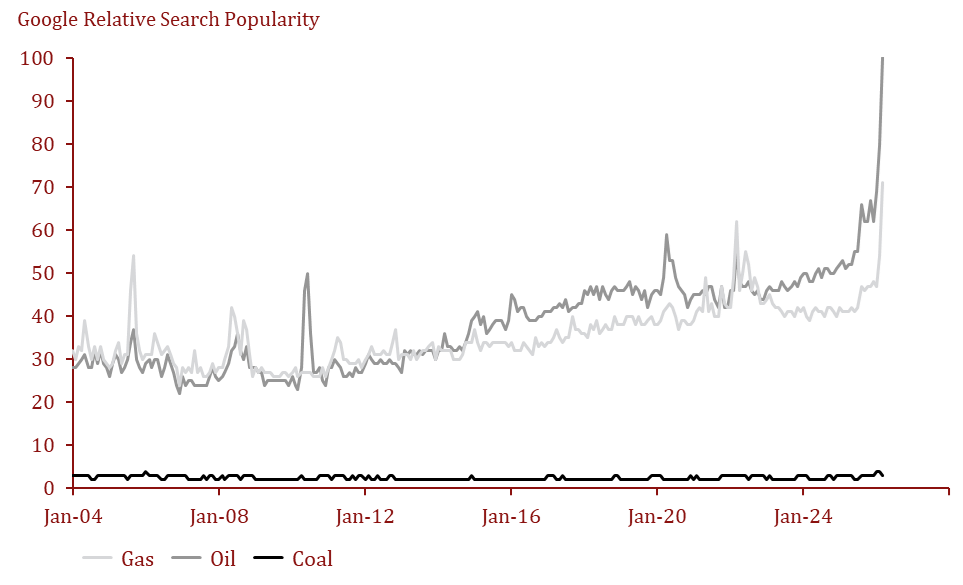
Yet we have a blind spot to coal. Our media report on it less than oil or gas. We search for it less on Google. Book mentions of coal peaked in the 1920s, superseded by oil and gas in the following decades. The question is why.
Relative frequency of energy search terms, 2004-2024
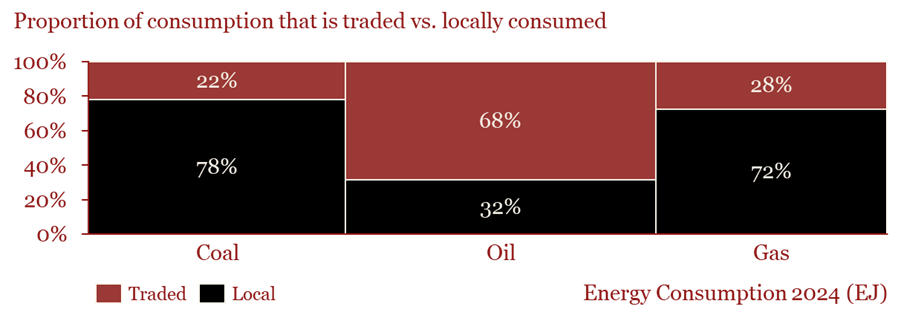
One answer is that coal is local. Just ~17 to 22% of coal trades across borders[iii]. Countries with a coal endowment are incentivised to use it for energy security, to reduce imports, and even generate tax revenue and export receipts. The global coal price is not tracked as closely as that of oil or gas and is not relevant in most markets because coal is so costly to export. Even within a country, coal regions are often separated from main population hubs. While petrol is pumped into cars, gas comes out of the stove, and renewables dot the landscapes, coal remains out of sight for most of the population.
Coal, gas, and oil consumption by traded share
A second reason coal might be overlooked is it is perceived to lack the dynamism of other energy sectors. The shiny new tech of renewables and the geopolitical intrigue of oil and gas conflicts are big news. We don’t go to wars over coal, and it’s one of the oldest technologies we still use on the grid. Its health and environmental impacts accumulate over time through chronic illnesses or gradual land degradation, rather than in major disasters like oil spills or explosions.
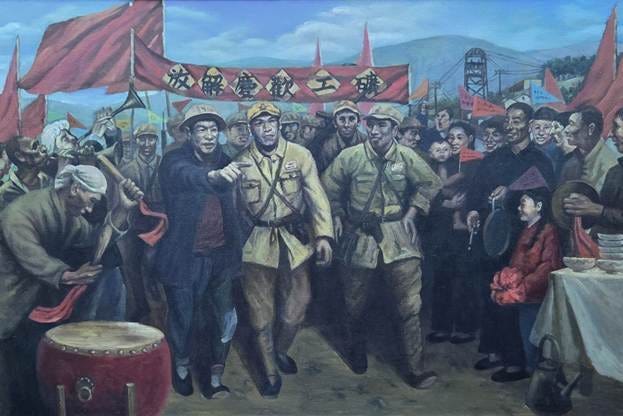
A third prospect is that coal has become so invisibly embedded in our energy systems that we take its benefits for granted. Coal delivers energy security and independence, and is increasingly important in a world in the midst of conflict. Coal protects industrial jobs in communities without much else. Coal supports billions of dollars of tax revenue and foreign currency management in states as diverse as India, Indonesia and Australia. Perhaps most salient of all, coal represents a culture that many of us admire, of the hard-working, self-sacrificing miner and the strong community which rallied around them. The political price of taking these upsides away is high, especially if people don’t experience the industry’s costs directly.
Painting in the Coal Museum in Datong
This helps explain why countries have turned to coal in the current crisis, but also puts this upsurge in perspective. Italy has delayed coal retirements by over a decade to 2038, but coal supplies less than 2% of its electricity. It is an expensive energy source, not least because its carbon tax bill is almost double that of gas, but avoiding blackouts might seem worth it for a marginal climate and cost impact. Meanwhile Japan and Korea are temporarily suspending utilisation caps on their coal power plants, but were already in the world’s top ten coal consumers before the Iran War began. Indonesia will likely reverse production caps to profit from this rise in coal demand, but these caps were instated just a few months ago to prop up coal prices.
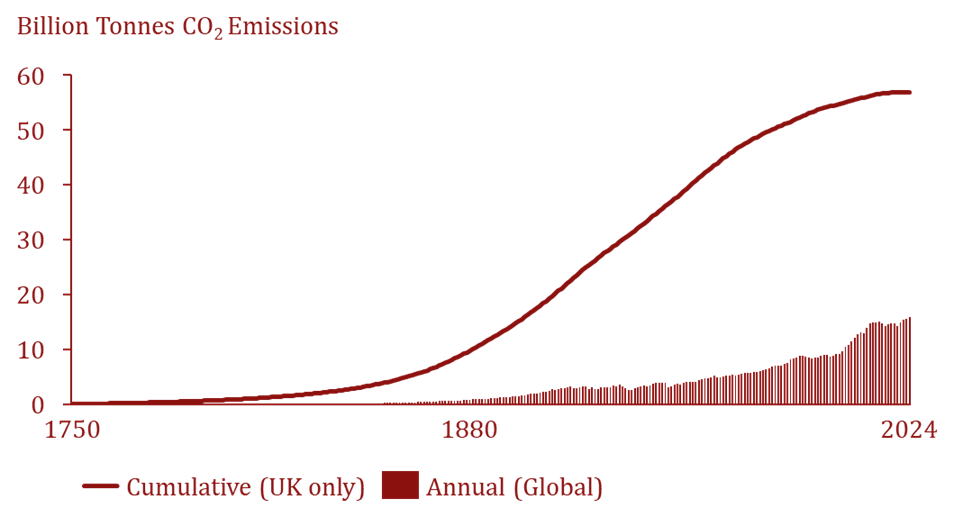
Similarly, commentary that this resurgence will be short-lived also misses the bigger picture. China, India, and the US are the world’s top coal consumers, and each of them was already indicating a desire to keep using coal before this war. China’s new five-year plan scraps earlier commitments to peak coal use. India has watered down pollution control requirements and started using batteries to allow coal plants to operate when renewables surge, instead of switching off. The US has seen the most dramatic reversal, subsidising ageing coal plants and struggling mines, repealing environmental and worker protections in an attempt to reduce costs, and promoting coal through meme culture. Even if coal use peaks and begins to gradually decline, a long plateau at current demand levels will contribute more emissions in four years than the UK’s coal since 1750.
Cumulative coal emissions in the UK versus annual coal emissions globally
Although we are using more coal than ever before, it has also never been a more replaceable fuel. Like coal, renewables deliver energy that is controllable within a country’s own borders, even if the equipment is initially imported from elsewhere. Coal is no longer cheap compared to renewables, with solar and wind regularly outcompeting coal power in China, Australia, the US, and India, even when taking into account the cost of batteries. Flexibility tech can erode the need for round-the-clock energy availability from coal and add to system resilience. We have barely scratched the surface of using the millions of distributed EV batteries or controllable heating systems to our energy networks’ advantage.
The strangest part about our global reliance on coal is that we don’t seem to know about it. This means we also don’t always know why we still use it and what it really costs us. Coal clearly has benefits like energy security, but it isn’t exactly cheap - not just because of uncompetitive unit costs but from damage to the environment and human health. Governments owe their citizens a clear explanation for why cleaner, cheaper, reliable technologies are not being prioritised instead.
Want to hear more? I’m doing a talk on this topic for Pints of Knowledge on May 25th - tickets are here, use the code “COMMUNITY” to get 30% off.
Join 900+ followers in 48 countries by subscribing to my Substack. You’ll get regular long-reads on the progress and pitfalls of the energy transition and other updates from me like talks and events.
[ii] Implies a market value of ~$60 per tonne. Met coal trades at $130-200, Chinese coal reference prices (half of global supply) are $100+ while domestic coal is significantly cheaper in places like India or the US.
[iii] A higher share trades by energy content (22%) as low-quality coal is not as cost-effective to export. A lower share of coal trades by mass (17%) according to IEA.
Coal has become so invisibly embedded in our energy systems that we take its benefits for granted. Coal delivers energy security and independence, and is increasingly important in a world in the midst of conflict. Coal protects industrial jobs in communities without much else. Coal supports billions of dollars of tax revenue and foreign currency management in states.
Coal consumption for electricity generation fell in 2025 (Ember).