
This is part of a series on the challenges and opportunities of coal phase-out. Others in the series include India’s billion dollar coal rents and Creating value from repurposing coal assets.
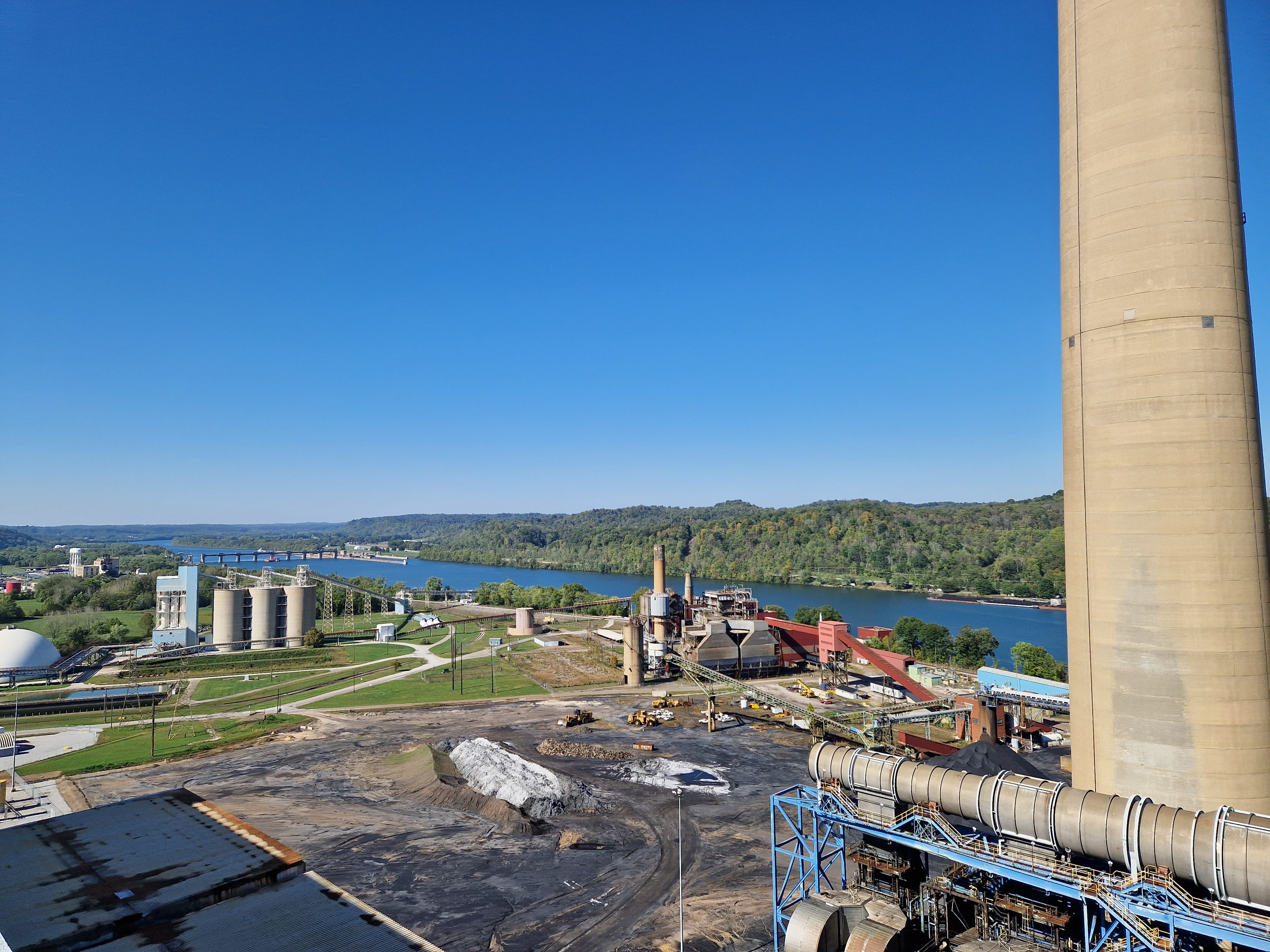
On the roof of Pleasants Power Station in West Virginia, I could almost hear the sun. The Ohio River glimmered below as coal barges glided past in silence. None of them stopped at the dock, because Pleasants only comes online when demand is high. This 1.3-gigawatt coal plant is idle most days because its electricity is too expensive to compete on wholesale markets, partly due to ramp-up costs.
Coal power is not fundamentally a flexible technology. To generate electricity, a fireball of coal boils an enormous column of water like a giant kettle, until it produces steam to turn turbines[1]. Older conventional plants like Pleasants[2] take at least eight hours to reach their target generation capacity from a cold start[3]. For it to respond to the market, it needs some warning, and a wholesale price that is high enough to justify the fuel costs for the ramp up and the maintenance cost of additional equipment fatigue from continuous cycling.
In practice, most coal plants do not go from 0% to 100% load to participate in the market. They deliver electricity most efficiently when operating continuously, somewhere between a minimum operational load and peak power delivery. In Pleasants’ case, its minimum load of ~600 megawatts is 46% of its peak winter load of 1,300 megawatts[4]. It is used so infrequently that its average utilisation was just 3.5% in 2025[5]. Because of its low operational viability, Pleasants received subsidies to stay operational before the Trump administration made these popular nationwide.
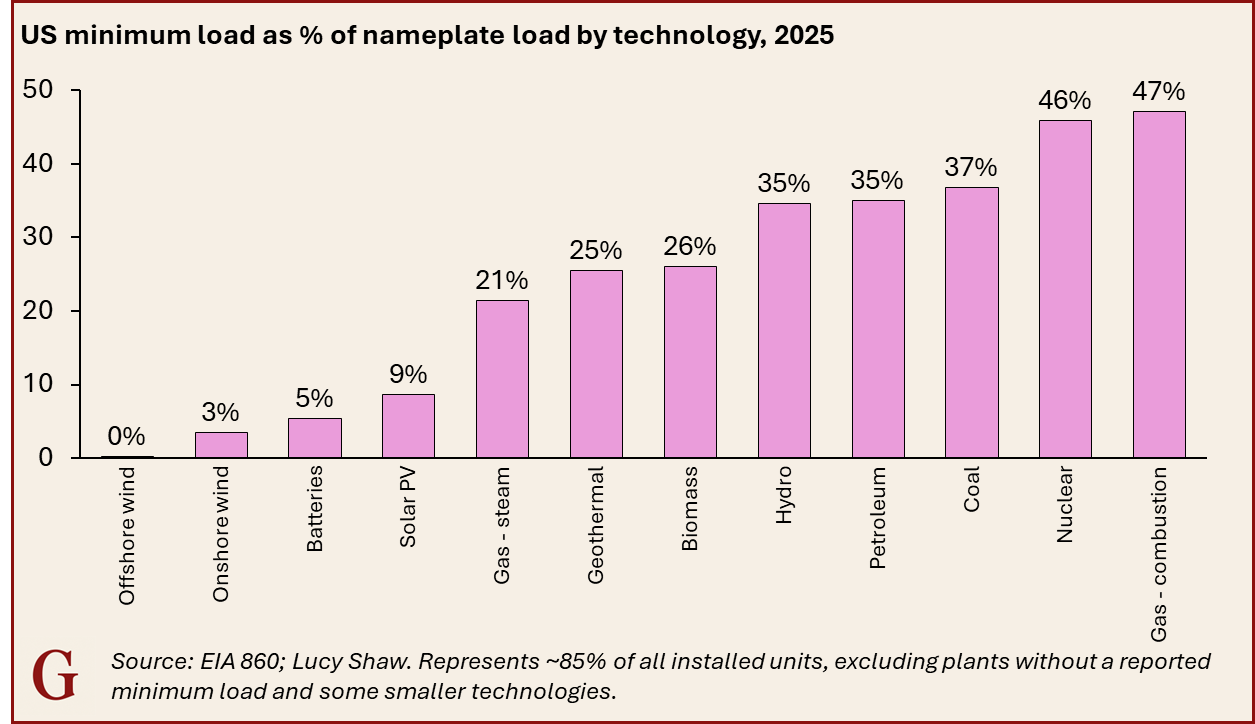
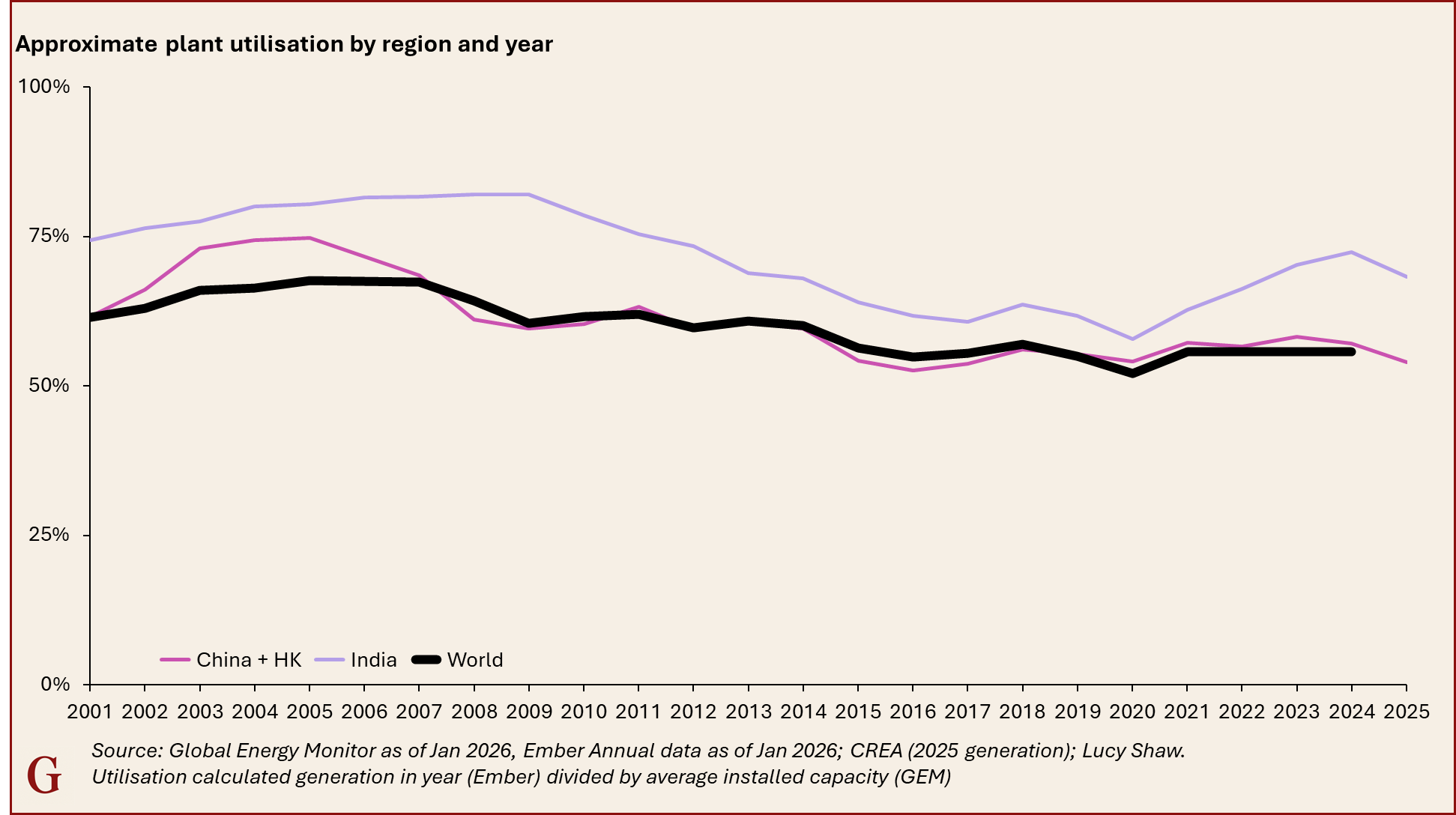
‘Flexible coal’ is a stretch even for modern coal plants. Newer facilities run cheaper and ramp up more efficiently in places like China and India, with average ages of 13 and 15 years respectively compared to 44 years in the US[6]. They still typically operate with a minimum load for plant stability and to reduce emissions, set at a 55% benchmark in India and a 35% target for ~200 gigawatts of Chinese retrofitted capacity between 2021 and 2025[7].
Power plant utilisation is 65-70% in India and 50-55% in China[8] even as coal electricity production fell in both countries in 2025. Unless plants are turned off seasonally like Pleasants, maintaining coal at lower utilisation means continuing to burn billions of tonnes of coal each year for electricity. This not only adds cost relative to cheaper solar and battery generation. This implies carbon emissions and air pollutants from coal will not reduce to near-zero by 2050, a requirement to meet the Paris climate agreement targets.
Flexible coal is part of an energy security and import substitution narrative that justifies continuing to build and use coal power plants when cheaper technologies can do the job. Other measures like capacity payments protect coal power plant revenues if generation declines. Reducing utilisation rather than replacing plants also keeps mine output steady or only gradually declining. India is even piloting flexible technologies like batteries to keep coal plants operational during solar peaks, instead of ramping down production. Flexible coal may reduce overall cost and emissions, but it still locks them in at a high level.
What does using modern flexible tech look like instead?
Flexible technologies are primarily about shifting demand and improving resilience. Demand shifting helps erode baseload power requirements by using electricity when it is cheapest, like during sunny or windy periods. Controllable demand and storage also substitute coal’s reliability benefits with back-up storage and the ability to reduce consumption during short-term system crunch periods.
This really comes to life with specific examples, like hot water heating in Australia. Hot showers and baths can be between 15 to 30% of a household’s electricity consumption, and half of Australian households already use electric water heating[9]. These heaters were once designed with baseload coal power in mind, programmed by default to turn on in the middle of the night when coal was always on and demand was low. Switching electric hot water heaters to activate in the middle of the day during peak solar generation would make heating hot water dramatically cheaper, which is possible for around 50% of heating requirements according to a UNSW study with energy retailer AGL. This requires manually resetting heaters, which can then be hooked up to smart meters. If this heating load could be dynamically controlled, it would be the equivalent of shifting gigawatts of load and 2.3 terawatt-hours of generation, less than the curtailed solar each year. That’s before electrifying more of Australia’s heating.
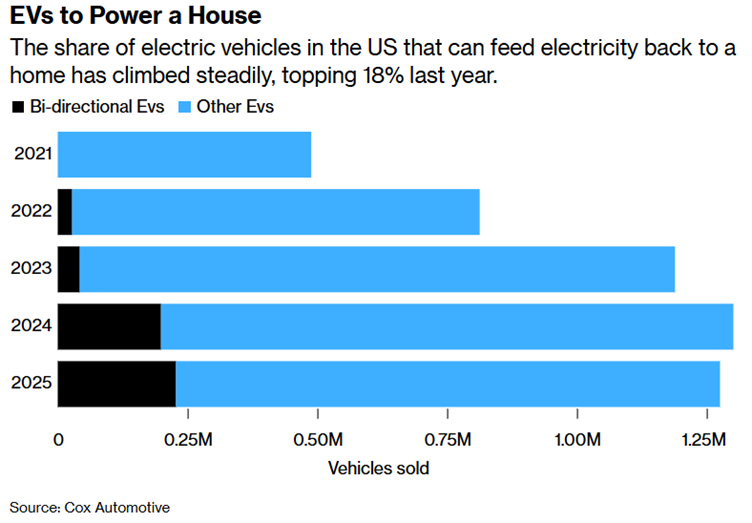
Another example is electric vehicles (EVs). The operating costs from electrifying transport are already lower than petrol alternatives, and using electricity flexibly brings costs down further and supports grid resilience. BasiGo, a Kenyan electric bus company[10], charges its buses at night-time when round-the-clock geothermal power is under-utilised. Firms like Nuuve support vehicle-to-grid trading to maximise revenues when US school bus fleets are idle outside of morning and afternoon rushes. Companies like Octopus in the UK offer much cheaper tariffs for EVs if they can control when the vehicle charges. Trading electricity from a vehicle’s battery is increasingly common. Customers of firms like Axle and Amber Electric earn revenue from their EV when they aren’t using it, and grid operators can reduce the cost of balancing supply and demand. EVs can now supply electricity to households for up to a week thanks to more models offering bidirectional charging, which reduced the number of people affected by blackouts in recent storms like Storm Fern in the US and Storm Goretti the UK.
Industrial demand is becoming flexible at scale across the grid. Heating and cooling facilities, for example large refrigeration units, can sometimes be turned off or ramped down temporarily without impacting the customer experience of safety. Companies like Voltus aggregate demand from these facilities to deliver a virtual power plant of demand reduction that can temporarily alleviate stress on the grid. Data centres are large loads that could reduce grid strain during demand surges by curbing consumption or switching to back-up power, like recent deals announced by Google.
Battery technology is both a demand shifting and resilience service. In addition to storing electricity when it’s cheapest for use when it’s needed, batteries also deliver the grid stability that coal power provides, like frequency and balancing services, synthetic ‘inertia’ to reduce the impact of shocks, and black starts when the grid goes down.
Flexibility has its limits, like customer fatigue, balancing loads for longer than a single day or being able to create electricity rather than just shift it. Flexibility needs to be automated and almost imperceptible to get its full benefits, rather than continuing current manual models that lead to flexibility fatigue because rewards are not worth the effort. Pleasants’ coal yard stores 30 days of supply before it needs replenishment, and the site requires minimal security and weather protection. This may relegate coal power to be seasonally helpful instead of flexible throughout the day, reducing overall production to ultra-low levels (e.g. 35% utilisation for 3 months of the year is just ~11% utilisation overall). Given the dramatic build-out of coal power alongside expanded cheap renewables production, this could be the reality over time in places like China and India.
Reducing coal’s minimum loads could bring utilisation down and make it more flexible than it is today. That is not the same as making coal a flexible technology. Promoting flexible coal risks keeping more plants online at a permanent lower load, instead of phasing out facilities that are no longer needed. Pleasants Power Plant has received hundreds of millions of dollars in support over the years, and continues to receive capacity payments for a plant that is barely used. This lock-in reduces the incentive to use alternatives. We should instead be prioritising the flexibility of dynamic demand and both distributed and centralised storage. This is what will actually bring down cost and improve the resilience of our modern electricity system.
Subscribe to join 600+ subscribers in 48+ countries for weekly analysis on the energy transition and share with your networks whether you loved the piece or violently disagree. I love to hear from readers - let me know what you think in the comments or by reply email.
[1] A very simplified explanation.
[2] Pleasants is 46-47 years old, its first unit was commissioned in 1979 and second in 1980. EIA-860 form.
[3] My guide told me this on a tour of the facility. For more information on ramp-ups, this EPA document is a useful reference.
[5] Jan to November year to date average against its winter nameplate capacity. EIA 860 and EIA 923 data.
[6] Using capacity-weighted average age, GEM coal power database as of Jan 2026.
[7] 200 gigawatts is around 1/6th of China’s coal capacity. GEM dashboard.
[8] Using Ember statistics for generation from coal, and GEM installed capacity. Indian government reports utilisation at 65% provisionally for 2025/26. CREA and GEM report 10-year average for China as 51%.
[9] From my lived experience, the type of heating solution depends on where you live – Victoria has higher gas penetration than e.g. Queensland which has lower space heating requirements. UNSW, 2024.
[10] Disclosure, I am an investor in BasiGo.
thoroughly enjoying this coal phase out series Lucy. Particularly enjoyed learning about replacing natural inertia, and the fatigue of hands-on flexibility.
A timely technical grounding for a pre- event piece I just published. It explores investors' considerations for grid flex investment in the UK.