
“Here are your keys, ma’am, you’ll be driving a RAM 2500 today.” I had booked a Manager’s Special, i.e. a mystery vehicle [1], the cheapest car rental option. I thought it would be one of the older, smaller vehicles on the lot. Instead, I got the largest pick-up truck I’d ever seen. “They’re unpopular because of fuel economy, but you’ll be safe on those roads,” the agent said [2]. It was 10pm at night but nonetheless, I got out a notepad to run the numbers on a more fuel-efficient car.
Frankly, I wanted to use less fuel to save money. Reducing carbon emissions was an upside. The RAM could do 18 miles per gallon (mpg) on a highway, or 12 mpg in a city. For an extra $25 per day, I was offered a smaller Chevy with twice the fuel efficiency. Over nine days, this would add an extra $225 to my rental bill. By my late-night math, I’d just about break even if I drove over 2,600 highway miles or 1,500 city miles [3]. I planned to do a lot of driving through West Virginia, but not nearly this much. I chose the cheaper, high-emissions option.
We face decisions like this every day, trading off cost savings with environmental impact. We often do not stop to run the calculations, lacking time or information. The economist’s view on a simple fix is to price carbon emissions, so that the implicit cost of climate change is reflected in our purchasing decisions without needing to give it additional thought.
Yet if carbon emissions were priced, I probably would have made the same decision at the rental desk. The US’s Environmental Protection Agency estimates that 8.9kg of carbon is produced per gallon of petrol. My estimated 1,000-mile drive would generate about half to three quarters of a tonne of carbon [4]. The Chevy alternative would save less than half a tonne of emissions. The World Bank suggests a price of $226 to $385 per tonne is necessary by 2030 to limit the global temperature rise to 1.5 degrees Celsius, an agreed target. Real-world carbon prices fall well below this, at around $46 in the UK and $66 in the EU for electricity-generated emissions and just $17.64 in the North-East of the USA where I was driving. Even at the highest end of this range, the RAM would still be cheaper [5].
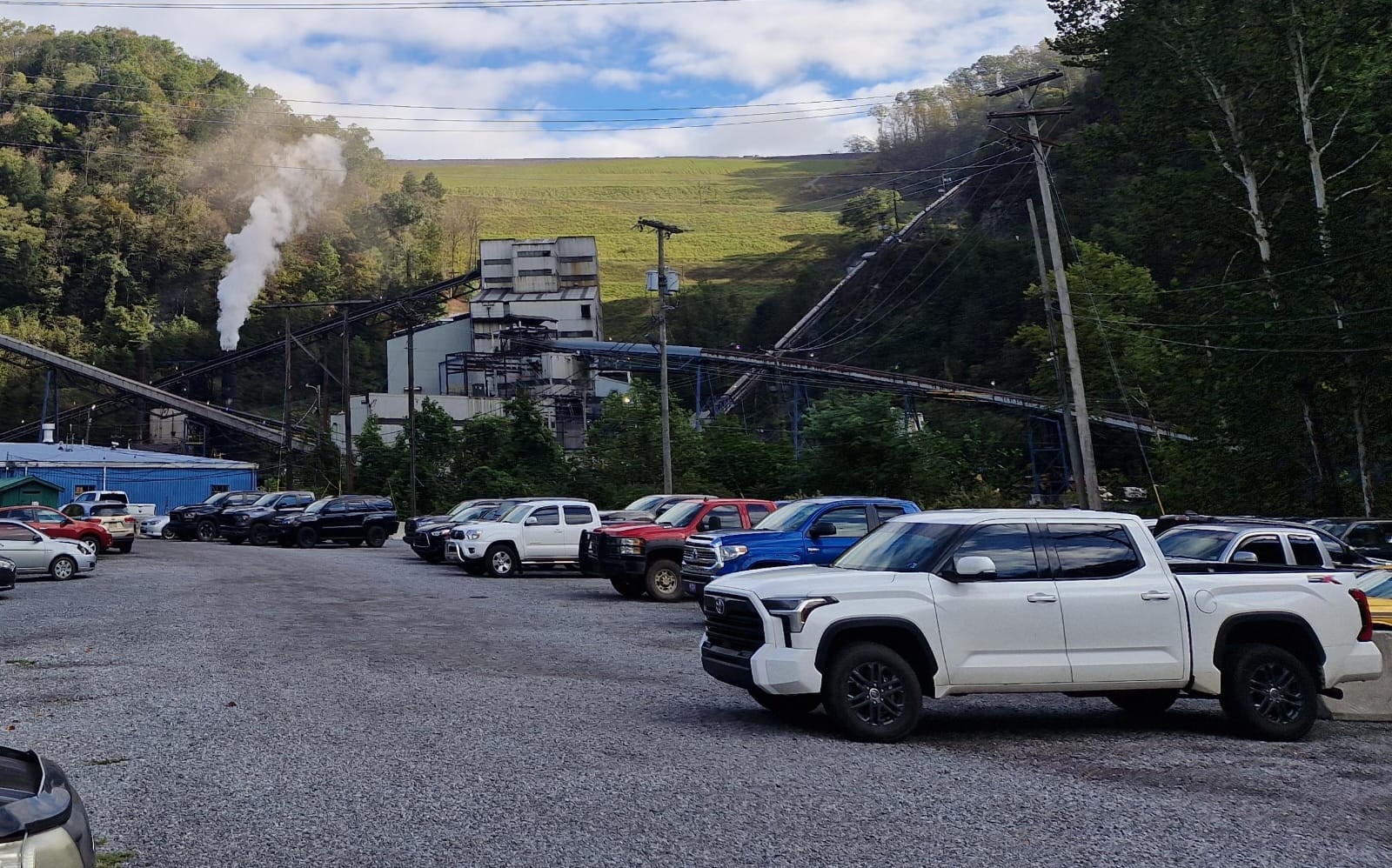
I drove away from the lot in my enormous car, blending in perfectly as I visited coal country. We often lament the political difficulty of applying controversial carbon prices. Yet what is striking about this situation is how businesses, not government, could have shaped my behaviour by providing more information.
Had Dollar, the rental car company, presented the fuel efficiency of the different options, I could have calculated an all-in price of my rental in advance. They could have even offered a tool to do this for me, which would have differentiated them from competitors. Partly this is my fault for choosing the mystery option, then experiencing a large change fee at the rental desk. However, had I known the extent of the difference in fuel use, I could have pre-booked the smaller car at a higher price and still saved money.
I also spent very little time considering an electric car. West Virginia is the 44th ranked state on public charging stations per capita [6] with just under 9 stations per hundred thousand residents. In market leaders like Massachusetts and California, this figure is 5 times higher. As a visitor with no guaranteed residential charge point and long drives to rural areas, I was worried about how to charge the vehicle. I learned that Dollar’s most common mystery vehicle assignment is an EV because they are the least popular, but they ran out on the night of my rental. Had I booked it, I would have saved immensely on fuel and emissions.
With small changes, Hertz, the parent company of Dollar, could do more on their commitment to sustainability. They priced their EVs at a higher rate, which made me reluctant to select this option when combined with the charging inconvenience. Although their sustainability report claims that they provide customer education and that they partner with electric charging companies, no such information was presented at the point of sale with Dollar. With an adjustment to their user interface, they could show the total cost of the rental and fuel to help customers select their vehicle. This would potentially persuade more people to choose electric and Hertz could capture upside from increased rental revenue.
Hertz isn’t the only business that stands to benefit from introducing lower emissions business models for transport. The service stations that offer electric chargers tend to earn higher non-fuel revenues as people make a rest stop out of their charging visit. Hotels could offer charging services, and potentially earn higher room rates than their competitors if they can offer savings on car bills.
A common dilemma of the energy transition is that the high-carbon option is often cheaper unless carbon is priced appropriately. Yet even when lower carbon options are less expensive overall, they sometimes are simply not presented as such. It is on us as customers to run the numbers on our own purchases. However, businesses could help us make more sustainable choices and increase their own income by merely providing more information on their products. That would be a lot easier, and much less divisive, than any carbon price.
[1] The picture looks more like a ‘mystery’ vehicle than a ‘special’ one.

[2] The Economist’s article on big cars and road safety goes into detail on this line of thinking.
[3] My rough math was $25 x 9 days = $225, divided by ~$3 from looking up gas prices per gallon in West Virginia. I compared highway fuel economy as the best case (18 mpg in the RAM versus 36 mpg in the Chevy), but even the worst-case city fuel economy required driving over 1,500 miles (12 mpg in the RAM, 29 mpg in the Chevy).
[4] The range comes from city versus highway conditions.1,000 miles / 12-18mpg, x 8.9kg/gallon
[5] Given that I did not plan to do much city driving where fuel economy is worse. This also is partly due to just how large Dollar’s premium was for a last-minute change, a 60% increase on the original price of my booking.
[6] Based on state population figures and station counts compiled by the US Department of Energy